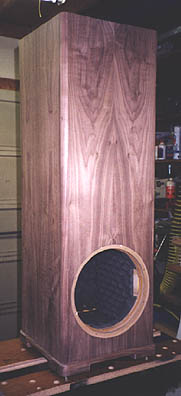
The Solid Walnut Base Pedestal
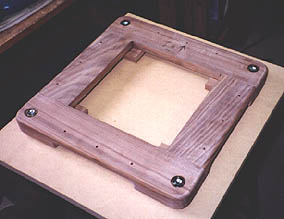
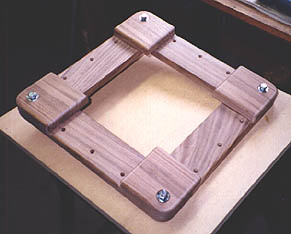
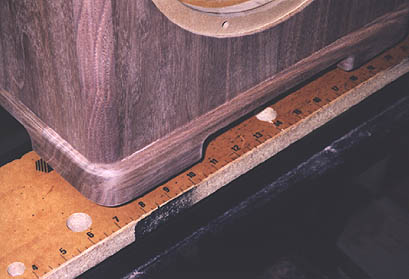
The pieces for the base pedestal were cut from the same 3/4" walnut plank that the box edges came from. The upper part of each pedestal was glued and clamped with urethane glue. They were then planed flat back at my favorite cabinet shop. The 4 "feet" were then glued on. All edges were rounded over 1/4". The finished pedestal is 1.5" thick.
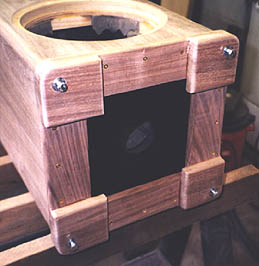
At the four corners, I put 5/16" T-nuts both top and bottom. This allows for either direct attachment of spikes in a compression mode (the bottom nuts take the load), or for bolting the speakers to a stand in tension mode (the upper nuts take the load).
My ultimate plan is to build short metal stands which will hold each monoblock amp directly underneath the speaker. Makes for VERY short speaker cable runs!